


Releases
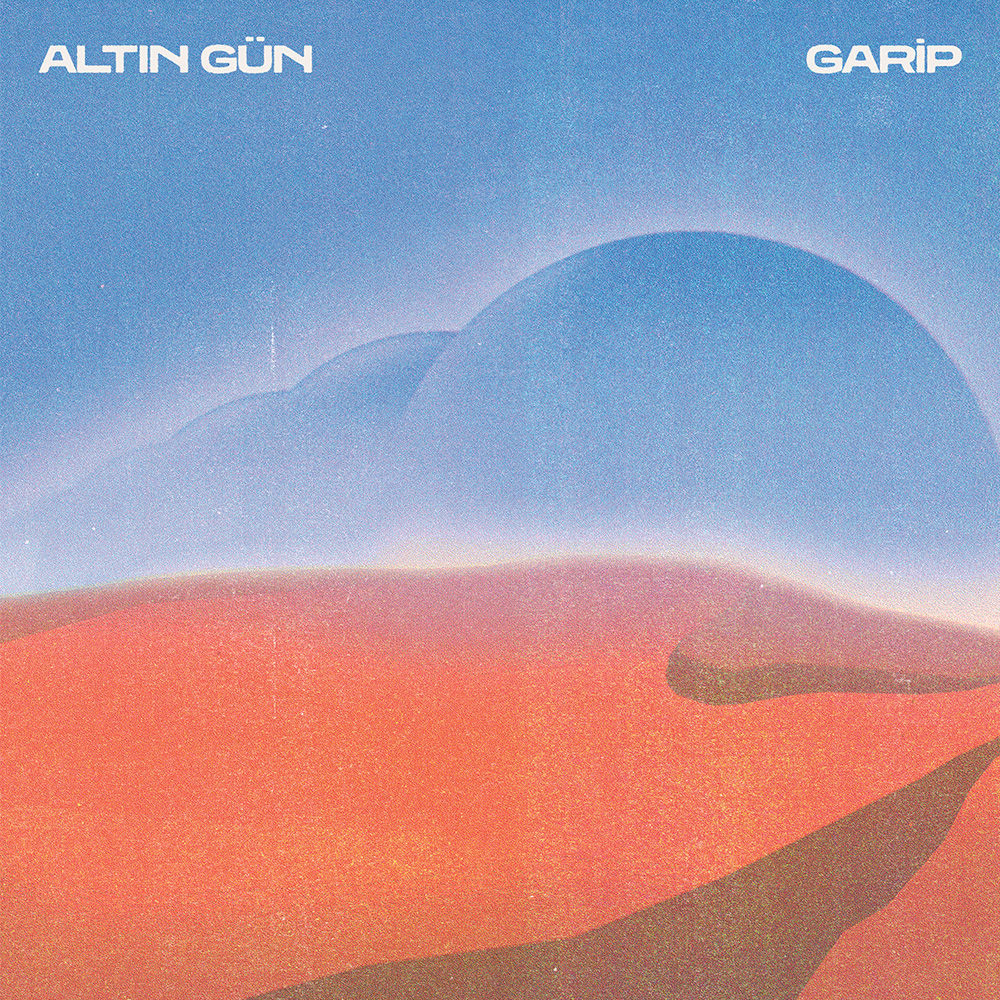
Altın Gün • Garip
Release Date: 20/02/2025
Format: LP/CD/DL
Cat-No: GBCD/LP 182
01. Neredesin Sen (04:29)
02. Gönül Dağı (04:06)
03. Öldürme Beni (04:57)
04. Niğde Bağları (04:27)
05. Benim Yarim (03:19)
06. Suçum Nedir (05:56)
07. Gel Yanima Gel (03:43)
08. Zülüf Dökülmüs Yüze (03:45)
09. Gel Kaçma Gel (03:47)
10. Bir Nazar Eyledim (06:07)
Altın Gün, the Grammy-nominated Turkish psych-groove quintet from Amsterdam, return with their sixth studio album Garip — their most ambitious and diverse release to date, and a heartfelt tribute to the legendary Turkish folk bard Neşet Ertaş.
Neşet Ertaş (1938–2012) was a beloved icon of Anatolian music; a gifted singer, lyricist, and bağlama virtuoso who carried the spirit of the ashik folk tradition into the modern era. Garip (“Strange” in English) features ten of his compositions, each reimagined and richly expanded through Altın Gün’s distinctive lens.
An electrifying live band with an ever-growing global following, Altın Gün push their sonic boundaries even further on Garip — weaving in lush Arabesque string arrangements, bursts of saxophone, glimmering synth balladry, and a fresh surge of tightly wound rock ’n’ roll.
—————————————————-
Since bursting onto the scene in 2018 with their debut album, On, Amsterdam-based Altın Gün have been at the vanguard of the 21st century revival of Turkish-influenced psychedelic grooves.
Coming straight out of the gate with a wah-wah and organ heavy sound that effortlessly captured the spirit of Anatolian 70s psych-funk masters like Bariş Manço and Erkin Koray, they deepened and expanded their palette with 2021’s Yol, which brought synths and drum machines into the mix for a more 80s-influenced dream-pop vibe.
But no matter how far out they’ve gone, they’ve always maintained a strong link to the same Anatolian folk traditions that inspired those early pioneers. Founder and bassist, Jasper Verhulst says: “We’re doing the same thing a lot of those artists were doing, which is playing Turkish traditionals and songs written by folk artists.”
Now, with their sixth album, Garip, they’ve brought that connection to the folk source front and centre, showcasing a collection of songs all originally written by Turkish folk legend Neşet Ertaş.
Ertaş (1938-2012) was a revered and much-loved Turkish singer, lyricist and bağlama player, and a modern-day embodiment of the ancient ashik tradition of the folk-bard-troubadour. Throughout his long career, he recorded more than 30 albums and wrote hundreds of songs – some of which were famously recorded by the likes of Bariş Manço and Selda Bağcan.
For Altın Gün’s vocalist, keyboardist and bağlama player, Erdinç Eçevit, interpreting a suite of Ertaş’s tunes is a chance to get back to his roots.
“Both of my parents are from Turkey, from the same area he is from,” he says. “It’s the music that I grew up with. When I was five, six years old, my grandfather always had cassettes by Neşet Ertaş and I used to listen to it all day long. Then I was too young to really understand the lyrics and the meaning, but I really liked the melodies.
Now, years later, Eçevit has fully immersed himself in Ertaş’s lyrics – messages from the heart that are, he says, “stories about what he’s facing in life. The Turkish traditional music is the blues of the Turkish people.”
Nowhere is this better exemplified than on ‘Gönul Daği,’ one of Ertaş’s most famous compositions, here brought to life by Eçevit’s yearning, sensitive vocals.
“‘Gönul Daği’ is about the pain of love, the storms of the heart and the loneliness of longing,” says Eçevit. “He’s expressing what rural Anatolia has always felt – that love is both sacred and sorrowful, a force of nature.”
In Altın Gün’s hands, the tune becomes a languid funk-rock crawl with watery guitar, a loping bassline and a palpable hint of mystery deepened by luxuriant string arrangements provided by the Stockholm Studio Orchestra.
The strings feature on several tracks, touching on influences including Egyptian popular music, Bollywood soundtracks and Turkish Arabesque. But, as Verhulst explains, there’s another touchstone underpinning the sound. “There’s definitely a French Italian influence in those arrangements,” he says.
It’s a prime example of Altın Gün’s urge to cast their net wide and incorporate a far-reaching set of magpie musical directions.
Album opener, ‘Neredesin Sen,’ is a throbbing, bass led vamp with a strong early-80s Indie flavour that showcases the fluid chemistry between drummer Daniel Smienk and percussionist Chris Bruining. The closing track, ‘Bir Nazar Eyeldim,’ is a breathtaking ballad with Eçevit’s pleading vocals playing out over lush synth arpeggios and a sparse electronic rhythm. Along the way, the band also touches on proggy vibes, with Eçevit getting down and dirty on the synth’s pitch-bend, and a laid-back west coast ambiance. Check out Thijs Elzinga’s gorgeous slide guitar on the smouldering ‘Gel Kaçma Gel’ to dig just how relaxed they can sound.
Fans of Altın Gün’s past work will find much to love too.
The Anatolian element is still strong – and not just in Eçevit’s aching vocals. Eçevit’s tight bağlama figures are woven throughout, making a direct link back to those earliest influences on tracks like the smoky ‘Niğde Bağlari,’ with its off-kilter folk rhythm and cavernous sense of the Anatolian steppes stretching out for miles.
“It’s our most eclectic album,” says Verhulst. “There’s a little bit of everything. The songs are harder to label. We wanted to do something different than what we’ve done before. Less in your face, less poppy, less obviously psych-rock. More just vibing.”
Garip is the sound of a band that’s constantly evolving. A mature musical unit with nothing to prove. A band that’s having a whole lot of fun.
Altın Gün are:
Jasper Verhulst – bass
Erdinç Eçevit – vocals, bağlama, keys
Daniel Smienk – drums
Chris Bruining – percussion
Thijs Elzinga – guitars

Altın Gün • Aşk
Release Date: 31/03/2023
Format: CD/LP/DL
Cat-No: GBCD/LP 138
01. Badi Sabah Olmadan (04:43)
02. Su Sızıyor (04:04)
03. Leylim Ley (04:14)
04. Dere Geliyor (03:46)
05. Çıt Çıt Çedene (04:05)
06. Rakıya Su Katamam (03:40)
07. Canım Oy (03:23)
08. Kalk Gidelim (04:32)
09. Güzelliğin On Para Etmez (03:46)
10. Doktor Civanım (03:55)
Their 5th album in as many years Aşk (deeper feeling of love), marks an exuberant return to the 70s Anatolian folk-rock sound that characterised Altın Gün’s first two albums.
It is a record that radiates the infectious energy found in the Amsterdam-based sextet’s celebrated live performances and next levels the group’s ground breaking sonic palette of Turkish psychedelic groove pop, sci-fi disco and dreamy acid folk.
——————
The first thing that grabs you about Altın Gün’s new album is the energy.
With Aşk, the Amsterdam-based sextet turn away from the electronic, synth-drenched sound of their 2021 albums, Âlem and Yol. While those two, created at home during the pandemic, paid homage to the electronic pop of the 80s and early 90s, Aşk, marks an exuberant return to the 70s Anatolian folk-rock sound that characterised Altın Gün’s first two albums, On (2018) and Gece (2019).
But there’s development here too. Aşk is the closest the band have come so far to capturing the infectious energy of their live performances. “It’s definitely connecting more with a live sound – almost like a live album,” says bassist Jasper Verhulst. “We, as a band, just going into a rehearsal space together and creating music together instead of demoing at home.”
“We didn’t record it like we did the last album,” agrees vocalist Merve Daşdemir. “We basically produced that one at home because of the pandemic. Now we’ve gone back to recording live on tape.”
“We took a very traditional approach to recording a rock album, like in the 70s,” Verhulst adds. In this instance, that doesn’t just mean getting six musicians together in a room with a few microphones. “It’s also about the gear that we are using,” says Verhulst, “the tape and everything.”
It’s this attention to detail in using vintage equipment and recording techniques that gives the album such a warm and welcoming sound. But, above all, this is the sound of friends and collaborators joyfully reconvening to make music together again in real time and space.
There’s also a deliberate return to the source in the material they’ve chosen for this album. All ten tracks are new readings of traditional Turkish folk tunes, revealing how these ancient songs remain eternally resonant and ripe for reinterpretation. “These songs have been covered so many times, always,” says Daşdemir “But not really in psychedelic pop versions,” Verhulst adds.
The album begins with “Badi Sabah Olmadan,” which also featured on Âlem as a burbling electronic excursion. But this is a different trip entirely. The opening snare roll cracks tight like a starting pistol, signalling a headlong flight into driving space rock, with Erdinç Ecevit supplying dolorous vocals and gnarled electric saz, and Thijs Elzinga’s razored slide guitar suggesting an Anatolian cousin to Pink Floyd’s psychedelic barn-stormer “One of These Days.”
The saz and slide guitar are all over “Su Sızıyor” too, a reggae-funk groove with Verhulst and drummer Daniel Smienk in-the-pocket like Sly and Robbie, providing a tight backdrop for Daşdemir’s pleading, teasing vocals. On “Dere Geliyor,” Ecevit adds ethereal keyboards, rolling into a deeply-dosed synth solo with Chris Bruinings’ clattering hand drums and stumbling time signatures summoning an epic prog-folk feel.
“Çit Çit Cedene” is the only track on the album that has previously had a 70s psych-folk makeover, by none other than Anadolu-psych legend Barış Manço. Here, Altın Gün add extra punch to his sultry funk vibe, with Ecevit unfurling another mind-blowing synth solo. The spirit of Barış Manço can also be detected in “Kalk Gidelim,” which bears distinct traces of Manço’s seductive classic “Lambaya Puf De.”
How many more worlds do Altın Gün visit in this joyful expedition? “Rakiya Su Katamam” is glowering space rock as though Gong had taken a stopover on the Bosphorus. “Canim Oy” is a psychedelic freak-beat stomper from a world where Istanbul’s Kadiköy district was the Carnaby Street of the east. “Güzelliğin On Para Etmez” is a dreamy acid-folk anthem. And the finale, “Doktor Civanim,” is an irresistible slice of sci-fi disco camp with lava-lamp synth squiggles that wouldn’t sound out of place next to Barış Manço’s “Ben Bilirim.”
Fresh yet timeless. Rooted in antiquity yet yearning for heavenly futures. Aşk wants to take you places. All you have to do is strap yourself in.
Altın Gün are:
Merve Daşdemir – vocals and keyboards
Erdinç Ecevit – vocals, saz and keyboards
Thijs Elzinga – guitar
Jasper Verhulst – bass
Daniel Smienk – drums
Chris Bruining – percussion

Altın Gün • Yol
Release Date: 26/02/2021
Format: CD/LP/DL
Cat-No: GBCD/LP 103
01. Bahçada Yeşil Çınar (0:31)
02. Ordunun Dereleri (4:34)
03. Bulunur Mu (3:04)
04. Hey Nari (3:12)
05. Yüce Dağ Başında (4:18)
06. Kesik Çayır (4:56)
07. Arda Boyları (2:24)
08. Kara Toprak (4:12)
09. Sevda Olmasaydı (3:15)
10. Maçka Yolları (3:40)
11. Yekte (3:46)
12. Esmerim Güzelim (2:31)
Altın Gün return with a masterful album that widens their critically acclaimed exploration of Anatolian rock and Turkish psychedelic stylings to include dreamy 80’s synth-pop and dancefloor excursions. Yol (Road) brings together all vectors of the Altın Gün experience and delivers their most compelling and individual album to date.
—————————————
Amsterdam’s Altın Gün have built a strong reputation for melding past and present to make brilliantly catchy, psychedelic pop music, as seen with their Grammy-nominated second album, Gece. They are also a renowned live band with strings of sold-out shows on three continents, who have consistently brought a muscular groove to their recordings. Yol, their third album in as many years, excitedly continues these trends; while also digging in deep to unveil a new palette of sonic surprises.
Though it draws from the rich and incredibly diverse traditions of Anatolian and Turkish folk music, Yol is not just a record that reframes traditional sounds for a contemporary audience. The album often presents a textured, avant-pop sound as evidenced by the debut single “Ordunun Dereleri.” Mysterious and atmospheric, the track is a thrilling evolution for the band. It patiently coaxes the listener into a resonant soundworld of down-tempo electro beats, majestic synths and Erdinç Ecevit’s yearning vocal of unrequited love.
The album also signals a very different approach in making and recording for the band. Singer Merve Dasdemir takes up the story: “We were basically stuck at home for three months making home demos, with everybody adding their parts. The transnational feeling maybe comes from that process of swapping demos over the internet, some of the music we did in the studio, but lockdown meant we had to follow a different approach.”
Yol displays a noticeable dreaminess, maybe born from this enforced time to reflect. And select elements of late 1970s or early 1980s “Euro” synth pop also shines through. This new musical landscape was nurtured by certain instrument choices; namely the Omnichord, heard on ‘Arda Boylari’, ‘Kara Toprak’ and ‘Sevda Olmasaydi’, and the drum-machine, an instrument that is key to the gorgeous closing number, ‘Esmerim Güzelim’. Dasdemir once more: “bass player Jasper Verhulst loved the song. He said, ‘it doesn’t sound like Altın Gün, this sounds like a Turkish kindergarten music teacher from the 1980s using an 808!”
As ever, the tracks are the result of a true group effort, with ideas on Omnichord, 808 and other elements – such as field recordings and new age-esque ideas – continually kicked about between the six band members. At a safe distance of course. The record also owes something special to its production team, the band working this time with Asa Moto (the Ghent-based producer-crew, Oliver Geerts and Gilles Noë) who mixed the record. Before this Altın Gün always recorded on tape with their own sound engineer.
It would be wrong to say that what made Altın Gün such a loved and successful band has been left to one side. The pressure-cookers ‘Sevda Olmasaydı’ and ‘Maçka Yolları’ are classic cuts from the band. And their signature employment of a dizzying array of ideas and approaches can be heard with the marked Brazilian feel of ‘Kara Toprak’ and ‘Yekte’. Cosmic reggae filters through the grooves of ‘Yüce Dağ Başında’, and there is a steaming version of ‘Hey Nari’ which gives the traditional composition by Ali Ekber Çiçek a kick onto the dancefloor.
But with Yol, Altın Gün have maybe patented their own magical process of reimagining and sonic path-finding, one probably not heard since the late 1960s and early 1970s British folk-rock boom. Less of a reworking than a seduction, their recordings transport the listener to a world where the original songs never previously inhabited. Merve Dasdemir again: “After we worked on them, they got a whole new life of their own. Maybe we went a little bit too far (laughs).”

Altın Gün • Ordunun Dereleri
Release Date: 18/11/2020
Format: 7″
Cat-No: GBEP 105
01. Ordunun Dereleri (4:45)
02. Bir Of Çeksem (3:02)
The Amsterdam band Altin Gün, return with a masterful single – and upcoming album – that widens their critically acclaimed exploration of Anatolian rock and Turkish psychedelic folk to include dreamy 80’s synth-pop and dancefloor excursions. The band are a renowned live act with strings of sold-out shows on three continents, whose recordings are marked by muscular grooves and vibrant melodies. Yol, their third album in as many years – and the follow up to their GRAMMYnominated second album Gece – excitedly continues that trend; while also digging in deep to unveil a new palette of sonic surprises.
“Ordunun Dereleri”– the debut single from Yol – is a reimagining of a traditional Turkish folk song, a classical love story about two doomed lovers, that showcases the band’s thrilling shift towards a synth-driven Europop sound. Mysterious and atmospheric, the track features down-tempo electro beats, majestic synths and Erdinç Ecevit’s yearning vocals of unrequited love.The single comes accompanied by the band’s very first narrative video, a gorgeous clip shot in the forests of the Netherlands.
The new album Yol will be released worldwide on February 26th, 2021.

Altın Gün • Gece
Release Date: 26/04/2019
Format: CD/LP+DL/DL
Cat-No: GBCD/LP 072
01. Yolcu (2:38)
02. Vay Dünya (4:18)
03. Leyla (3:17)
04. Anlatmam Derdimi (4:12)
05. Şoför Bey (3:15)
06. Derdimi Dökersem (3:53)
07. Kolbastı (3:26)
08. Ervah-ı Ezelde (4:45)
09. Gesi Bağları (2:02)
10. Süpürgesi Yoncadan (5:30)
Following their hotly tipped 2018 debut album “On” – Altın Gün returns with an exhilarating second album. “Gece” firmly establishes the band as essential interpreters of the Anatolian rock and folk legacy and as a leading voice in the emergent global psych-rock scene. Explosive, funky and transcendent.
The world is rarely what it seems. A quick glance doesn’t always reveal the full truth. To find that, you need to burrow deeper. Listen to Altın Gün, for example: they sound utterly Turkish, but only one of the Netherlands based band’s six members was actually born there. And while their new album, Gece, is absolutely electric, filled with funk-like grooves and explosive psychedelic textures, what they play – by their own estimation – is folk music.
“It really is,” insists band founder and bass player Jasper Verhulst. “The songs come out of a long tradition. This is music that tries to be a voice for a lot of other people.”
While most of the material here has been a familiar part of Turkish life for many years – some of it associated with the late national icon Neşet Ertaş – it’s definitely never been heard like this before. This music is electric Turkish history, shot through with a heady buzz of 21st century intensity. Pumping, flowing, a new and leading voice in the emergent global psych scene.
“We do have a weak spot for the music of the late ‘60s and ‘70s,” Verhulst admits. “With all the instruments and effects that arrived then, it was an exciting time. Everything was new, and it still feels fresh. We’re not trying to copy it, but these are the sounds we like and we’re trying to make them our own.”
And what they create really is theirs. Altın Gün radically reimagine an entire tradition. The electric saz (a three-string Turkish lute) and voice of Erdinç Ecevit (who has Turkish roots) is urgent and immediately distinctive, while keyboards, guitar, bass, drums, and percussion power the surging rhythms and Merve Daşdemir (born and raised in Istanbul) sings with the mesmerizing power of a young Grace Slick. This isn’t music that seduces the listener: it demands attention.
Altın Gün – the name translates as “golden day” – are focused, relentless and absolutely assured in what they do. What is remarkable is the band has only existed for two years and didn’t play in public until November 2017; now they have almost 200 shows under their belt. It all grew from Verhulst’s obsession with Turkish music. He’d been aware of it for some time but a trip to Istanbul while playing in another band gave him the chance to discover so much more. But Verhulst wasn’t content to just listen, he had a vision for what the music could be. And Altın Gün was born.
“For me, finding out about this music is crate digging,” he admits. “None of it is widely available in the Netherlands. Of course, since our singers are Turkish, they know many of these pieces. All this is part of the country’s musical past, their heritage, like ‘House of The Rising Sun’ is in America.” As Verhulst delves deeper and deeper into old Turkish music, he’s constantly seeking out things that grab his ear.
“I’m listening for something we can change and make into our own. You have to understand that most of these songs have had hundreds of different interpretations over the years. We need something that will make people stop and listen, as if it’s the first time they’ve heard it.”
It’s a testament to Altın Gün’s work and vision that everything on Gece sounds so cohesive. They bring together music from many different Anatolian sources (the only original is the improvised piece “Şoför Bey”) so that it bristles with the power and tightness of a rock band; echoing new textures and radiating a spectrum of vibrant color (ironic, as gece means “night” in Turkish). It’s the sound of a band both committed to its sources and excitedly transforming them. It’s the sound of Altın Gün. Incandescent and sweltering.
Creating the band’s sound is very much a collaborative process, Verhulst explains.
“Sometimes me or the singer will come in with a demo of our ideas. Sometimes an idea will just come up and we’ll work on it together at rehearsals. However we start, it’s always finished by the whole band. We can feel very quickly if it’s going to work, if this is really our song.”
Just how Altın Gün can collectively spark and burn is evident in the YouTube concert video they made for the legendary Seattle radio station KEXP. In just under 20 minutes they set out their irresistible manifesto for an electrified, contemporary Turkish folk rock. It’s utterly compelling. And with around 800,000 views, it has helped make them known around the world.
“It certainly got us a lot of attention,” Verhulst agrees. “I think a lot of that interest originally came from Turkey, plenty of people there shared it.”
That might be how it began, but it’s not the whole tale. The waves have spread far beyond the Bosphorus. What started out as a deep passion for Turkish folk and psychedelia has taken on a resonance that now travels widely. The band has played all over Europe, has ventured to Turkey and Australia and will soon bring their music to North America for the first time.
“Not a lot of other bands are doing what we do,” he says, “playing songs in that style and seeing folk music in the same way.”
Altın Gün are:
Ben Rider (guitar)
Daniel Smienk (drums)
Erdinç Ecevit (synths, saz, vocals)
Gino Groenveld (percussion)
Jasper Verhulst (electric bass)
Merve Daşdemir (vocals, keys)
Altın Gün
Altın Gün, the Grammy-nominated Turkish psych-groove quintet from Amsterdam, return with their sixth studio album Garip — their most ambitious and diverse release to date, and a heartfelt tribute to the legendary Turkish folk bard Neşet Ertaş.
Neşet Ertaş (1938–2012) was a beloved icon of Anatolian music; a gifted singer, lyricist, and bağlama virtuoso who carried the spirit of the ashik folk tradition into the modern era. Garip (“Strange” in English) features ten of his compositions, each reimagined and richly expanded through Altın Gün’s distinctive lens.
An electrifying live band with an ever-growing global following, Altın Gün push their sonic boundaries even further on Garip — weaving in lush Arabesque string arrangements, bursts of saxophone, glimmering synth balladry, and a fresh surge of tightly wound rock ’n’ roll.
—————————————————-
Since bursting onto the scene in 2018 with their debut album, On, Amsterdam-based Altın Gün have been at the vanguard of the 21st century revival of Turkish-influenced psychedelic grooves.
Coming straight out of the gate with a wah-wah and organ heavy sound that effortlessly captured the spirit of Anatolian 70s psych-funk masters like Bariş Manço and Erkin Koray, they deepened and expanded their palette with 2021’s Yol, which brought synths and drum machines into the mix for a more 80s-influenced dream-pop vibe.
But no matter how far out they’ve gone, they’ve always maintained a strong link to the same Anatolian folk traditions that inspired those early pioneers. Founder and bassist, Jasper Verhulst says: “We’re doing the same thing a lot of those artists were doing, which is playing Turkish traditionals and songs written by folk artists.”
Now, with their sixth album, Garip, they’ve brought that connection to the folk source front and centre, showcasing a collection of songs all originally written by Turkish folk legend Neşet Ertaş.
Ertaş (1938-2012) was a revered and much-loved Turkish singer, lyricist and bağlama player, and a modern-day embodiment of the ancient ashik tradition of the folk-bard-troubadour. Throughout his long career, he recorded more than 30 albums and wrote hundreds of songs – some of which were famously recorded by the likes of Bariş Manço and Selda Bağcan.
For Altın Gün’s vocalist, keyboardist and bağlama player, Erdinç Eçevit, interpreting a suite of Ertaş’s tunes is a chance to get back to his roots.
“Both of my parents are from Turkey, from the same area he is from,” he says. “It’s the music that I grew up with. When I was five, six years old, my grandfather always had cassettes by Neşet Ertaş and I used to listen to it all day long. Then I was too young to really understand the lyrics and the meaning, but I really liked the melodies.
Now, years later, Eçevit has fully immersed himself in Ertaş’s lyrics – messages from the heart that are, he says, “stories about what he’s facing in life. The Turkish traditional music is the blues of the Turkish people.”
Nowhere is this better exemplified than on ‘Gönul Daği,’ one of Ertaş’s most famous compositions, here brought to life by Eçevit’s yearning, sensitive vocals.
“‘Gönul Daği’ is about the pain of love, the storms of the heart and the loneliness of longing,” says Eçevit. “He’s expressing what rural Anatolia has always felt – that love is both sacred and sorrowful, a force of nature.”
In Altın Gün’s hands, the tune becomes a languid funk-rock crawl with watery guitar, a loping bassline and a palpable hint of mystery deepened by luxuriant string arrangements provided by the Stockholm Studio Orchestra.
The strings feature on several tracks, touching on influences including Egyptian popular music, Bollywood soundtracks and Turkish Arabesque. But, as Verhulst explains, there’s another touchstone underpinning the sound. “There’s definitely a French Italian influence in those arrangements,” he says.
It’s a prime example of Altın Gün’s urge to cast their net wide and incorporate a far-reaching set of magpie musical directions.
Album opener, ‘Neredesin Sen,’ is a throbbing, bass led vamp with a strong early-80s Indie flavour that showcases the fluid chemistry between drummer Daniel Smienk and percussionist Chris Bruining. The closing track, ‘Bir Nazar Eyeldim,’ is a breathtaking ballad with Eçevit’s pleading vocals playing out over lush synth arpeggios and a sparse electronic rhythm. Along the way, the band also touches on proggy vibes, with Eçevit getting down and dirty on the synth’s pitch-bend, and a laid-back west coast ambiance. Check out Thijs Elzinga’s gorgeous slide guitar on the smouldering ‘Gel Kaçma Gel’ to dig just how relaxed they can sound.
Fans of Altın Gün’s past work will find much to love too.
The Anatolian element is still strong – and not just in Eçevit’s aching vocals. Eçevit’s tight bağlama figures are woven throughout, making a direct link back to those earliest influences on tracks like the smoky ‘Niğde Bağlari,’ with its off-kilter folk rhythm and cavernous sense of the Anatolian steppes stretching out for miles.
“It’s our most eclectic album,” says Verhulst. “There’s a little bit of everything. The songs are harder to label. We wanted to do something different than what we’ve done before. Less in your face, less poppy, less obviously psych-rock. More just vibing.”
Garip is the sound of a band that’s constantly evolving. A mature musical unit with nothing to prove. A band that’s having a whole lot of fun.
Altın Gün are:
Jasper Verhulst – bass
Erdinç Eçevit – vocals, bağlama, keys
Daniel Smienk – drums
Chris Bruining – percussion
Thijs Elzinga – guitars