


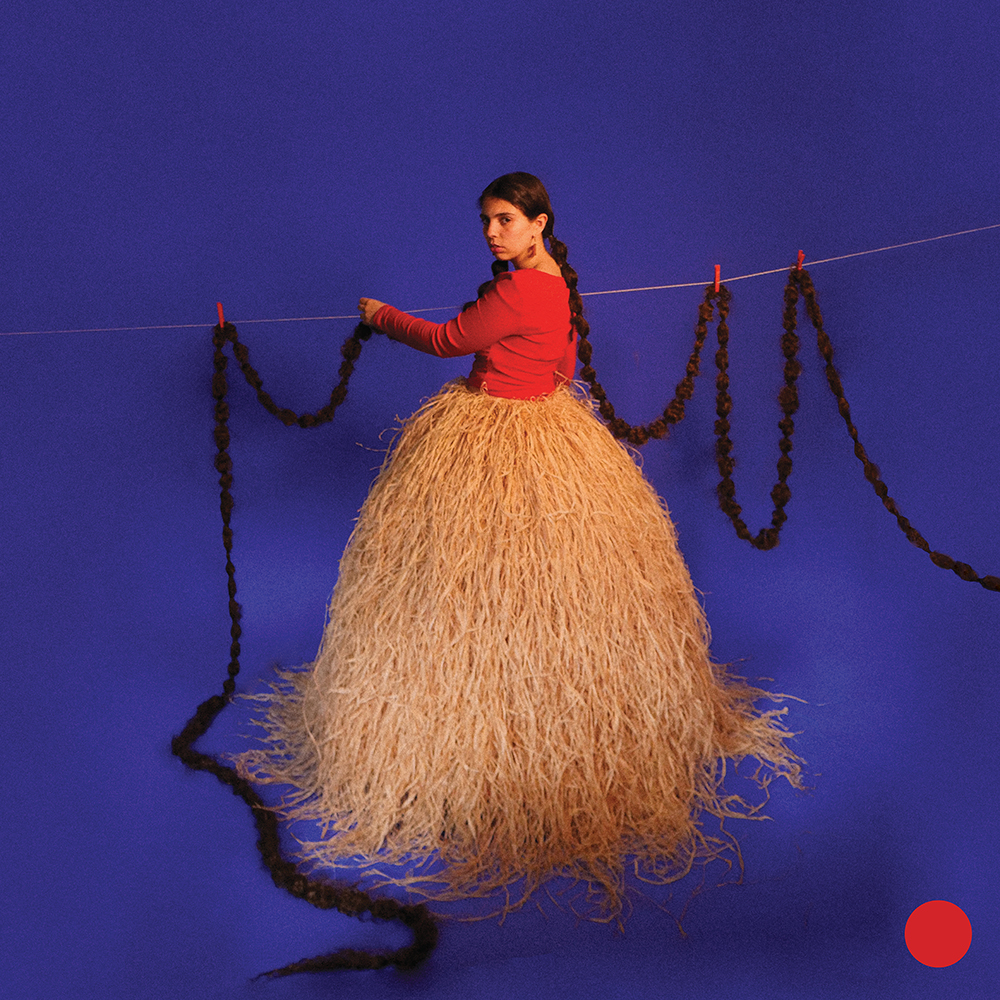
Description
RELEASE DATE: NOVEMBER 6th, 2026
“Her carefully multilayered vocals sit front and centre while buzzes, scrapes, handclaps and cut-up shards mesh to form glitchy micro-rhythms and crunching, hook-heavy grooves… Caiano’s songs are oblique and even fantastical takes on issues people experience in their everyday lives, such as isolation, routine and tiredness.”
— The Wire
Entering a new phase in her acclaimed artistic journey, the Portuguese singer, musician, producer, and composer Ana Lua Caiano returns with an exhilarating second album that expands and deepens the singular musical language she has been shaping in recent years—one where Portuguese folk tradition collides with electronics, rhythmic experimentation, lyrical rebellion and an intensely physical vocal presence.
“Devagar Que A Vida É Curta” is an album suspended between urgency and reflection – rooted in contemporary life, yet haunted by themes deeply embedded in traditional narratives across cultures: death, impermanence, exhaustion, transformation and the fragile illusion that there will always be more time. Caiano tells us:
“The album’s title, “Devagar Que A Vida É Curta” (Slowly as Life Is Short), comes from a phrase my grandfather used to repeat very often. As a child, I understood it in exactly the opposite way – if life is short, then we should hurry. Today, I see it as a reminder to slow down and truly experience everyday life. The songs on this record were born from that tension between constant rush and the need for mindfulness.”
What connects these songs is a recurring need to change perspective; to reject destructive routines and ways of living that slowly drain vitality and presence. Throughout the album, restlessness becomes both personal and collective experience – an attempt to reclaim life now, instead of endlessly postponing it.
“Look, dip your foot in this cold water
Look, come place your hand in this frozen sea
For the present quickly departs
So, so, so fast, so, so, so fast, goes, goes, goes in a rush”
— Se A Cabeça Anda Manca (If the Head is Limping)
“Only after some time did I realize that many of the songs on the album deal, in different ways, with themes of loss and mortality” she says. “These are stories hidden within metaphors of everyday life: hard work, emigration, and postponing life for later. In Portugal, many people leave to work abroad dreaming of returning home one day, but for many that return never happens. Those experiences became an important backdrop for this album.”
The first single Uma Vida A Menos (A Lifetime Less) introduces this new chapter with striking clarity. Critiquing the limited time modern life allows for rest and recovery, the song reflects on the endless anticipation of weekends, holidays and temporary escapes from work-driven routines.
“I reach the end of the day, as if I reached the end of life
There are more men buried in work than in graves”
Musically, it opens the door to a more transgressive and progressive sonic territory, balancing electronic structures with Portuguese traditional elements while introducing new textures that permeate the entire album: piano, feverish vocal layers and abrupt shifts in dynamics.
“While working on the album, I wanted to continue exploring the sonic landscape that combines traditional Portuguese music with electronics, this time enriching it with a stronger presence of acoustic instruments.” Caiano adds, “the piano became especially important to me—it has been part of my life for years and remains my natural tool for composing. I wanted my classical background to resonate more clearly throughout this record.”
Built around contrast, tension and movement, the album constantly oscillates between intimacy and rupture. Traditional instruments such as bagpipes, flutes, adufe and bombo interact with synthesizers, choral arrangements and prepared sound objects, while everyday tools and domestic machinery – including sewing machines – become rhythmic instruments in their own right, reinforcing the physicality and repetitive pulse of labor embedded in many of the songs.
This expanded sonic palette also transforms Ana Lua Caiano’s approach to voice. At times fragile and ritualistic, elsewhere distorted, obsessive or nearly delirious, the vocals move further into experimentation, embracing instability and emotional excess as compositional tools.
These new possibilities extend directly into the live dimension – an essential aspect of Ana Lua Caiano’s artistic identity. One of her most remarkable strengths as a performer has always been her ability to create a fully immersive, multidimensional solo performance: a self-sufficient one-woman spectacle where voice, rhythm, gesture and technology coexist organically on stage. With this new material, that performative universe grows even wider. The expanded setup incorporates not only piano and traditional instrumentation, but also everyday objects and mechanical textures that embody the physical repetition of routine work, transforming the stage into a space where sound, movement and gesture become inseparable.
Deeply connected to Portuguese musical heritage yet constantly reshaping it through a contemporary lens, Ana Lua Caiano continues to build a body of work that resists easy categorization. Her music is simultaneously ancestral and futuristic, intimate and political, unsettling and alive.
“War robs the routine, and reason too
Where there is no bread, even crumbs will do
With destiny marked into their skin, the new children are born
Oh, they arrive lying down, and lying down they go in vain”
— Come, Come, Cresce (Eat, Eat, Grow)
